

Understanding the Tesla Model Y Juniper Value has suddenly become a haunting necessity for every owner standing on the edge of a financial cliff. For a hardworking father, the Tesla Model Y was never just a vehicle; it was a silent pact with the future. It was a $50,000 investment in the promise that your car would only get better over time, evolving through the magic of software while traditional internal combustion engines rotted on the driveway. You told your family this was the safest, smartest, and most advanced machine on the road.
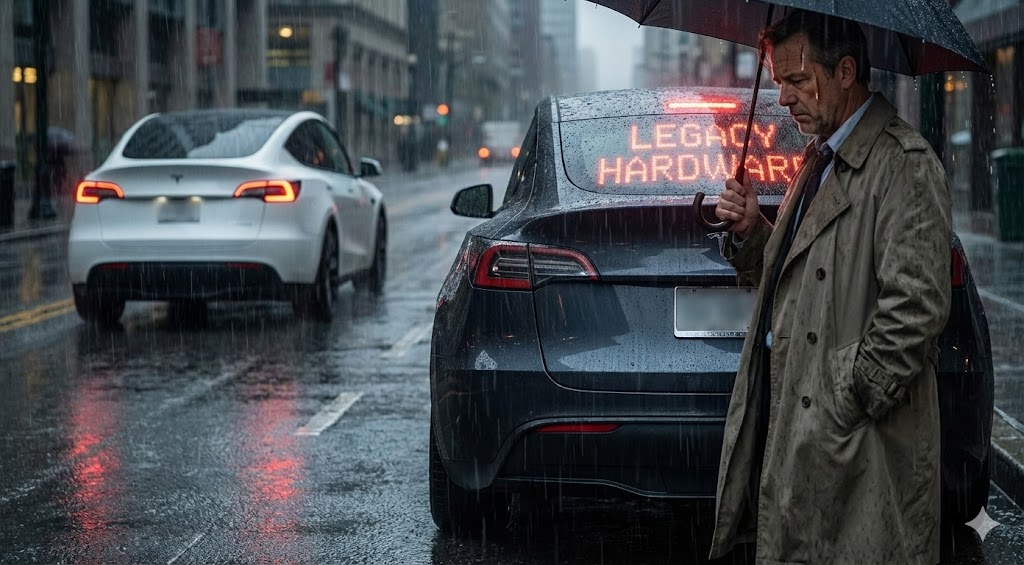
But as the first official images and technical specifications of the Juniper refresh began to circulate, that dream turned into a cold, hard realization. Millions of current owners didn’t see a new car; they saw the expiration date of their own. Overnight, the world’s most popular EV split into two castes: those who own the future, and those who are stuck with Legacy Hardware.

1. The Safety Gap: Why Your ‘Eyes’ and ‘Brain’ Are Failing You
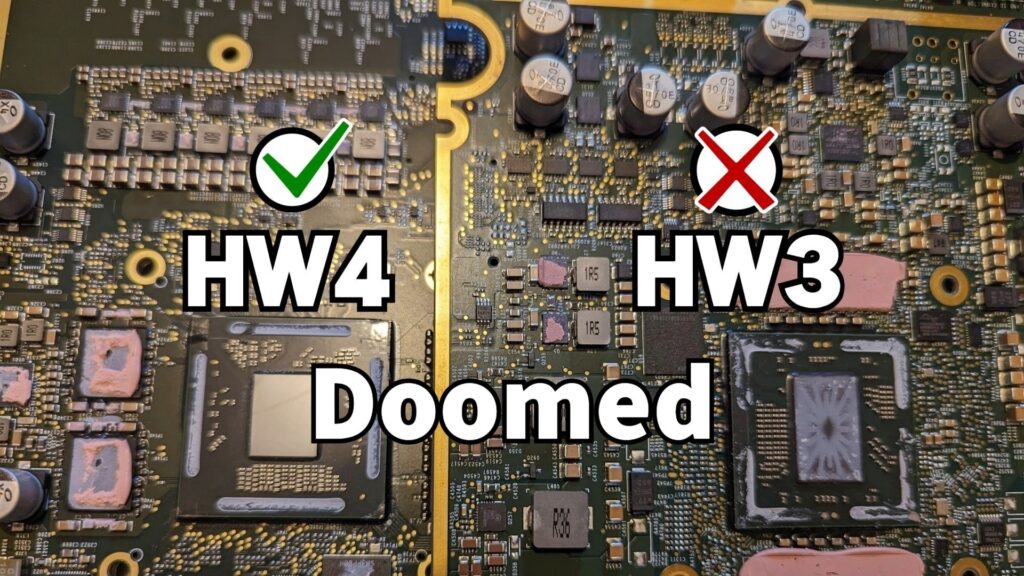
The most brutal betrayal isn’t found in the new light bar or the ventilated seats. It is hidden deep within the silicon. For years, Tesla insisted that Hardware 3 (HW3) was the pinnacle of automotive intelligence. But the Juniper refresh, armed with AI4 (Hardware 4), has exposed the technical ceiling of our current vehicles.
Your current Model Y relies on HW3, featuring aging 1.2-megapixel cameras. In the eyes of an AI, this is like trying to navigate a high-speed highway through a blurred, grainy lens. The Juniper, however, sees the world in 5-megapixel Ultra-High-Definition (UHD).
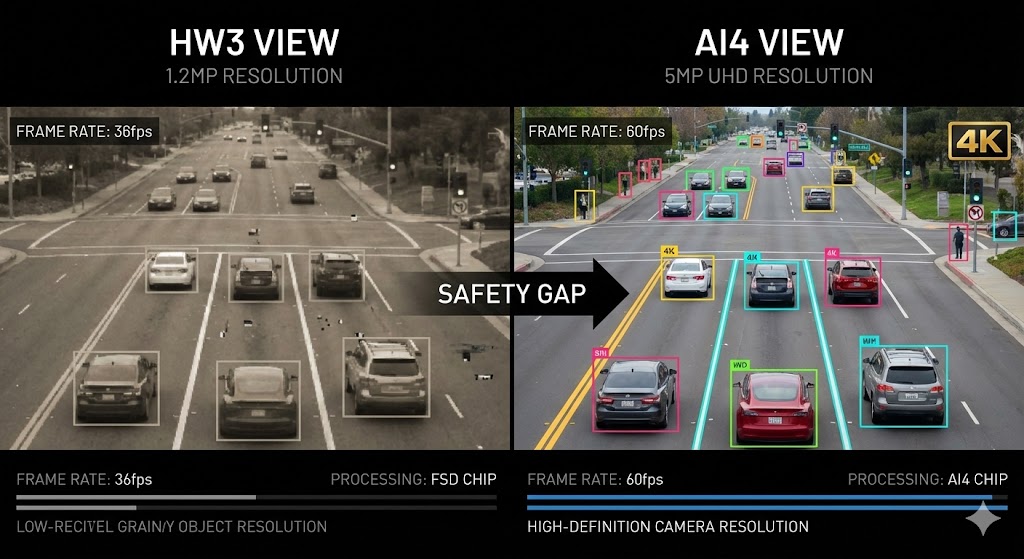
This isn’t just about clear pictures; it’s about life and death. AI4 processes data at nearly five times the speed of the computer sitting in your dashboard right now. As FSD software becomes more complex, requiring higher frame rates and more precise object detection, your HW3 is hitting its computational limits. Knowing that your car’s “brain” is significantly slower than the newer model creates a psychological rift. You bought this car to protect your children with the best AI, only to find that your AI is now computationally obsolete.
2. The Financial Massacre: Calculating the Wealth Destruction
Tesla’s relentless pursuit of manufacturing efficiency is a miracle of engineering, but it has proven to be a disaster for the individual owner’s balance sheet. When Tesla cuts prices and releases a vastly superior model at a lower entry point, the value of your used vehicle doesn’t just dip—it collapses.
Let’s look at the cold, hard mathematics of this betrayal. If you purchased a Model Y Long Range in 2022 at the peak of the market for approximately $65,000, your current trade-in value in late 2025 is likely hovering around $25,000.
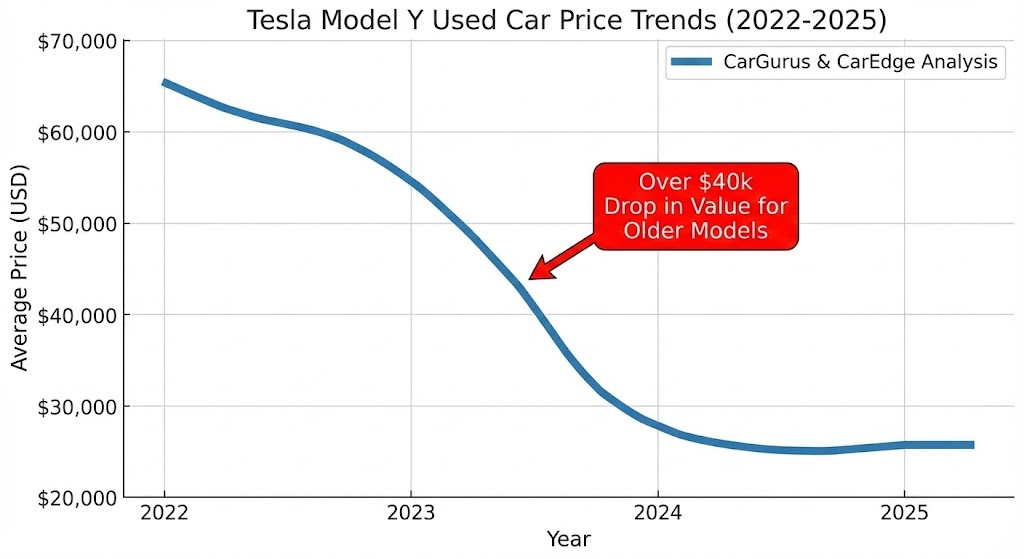
For a middle-class family, $40,000 is not just a number. It is years of hard work, sacrificed at the altar of Tesla’s “Move Fast and Break Things” philosophy. The Juniper’s competitive pricing effectively caps the resale value of every older Model Y on the road, turning your investment into a financial black hole.
3. The Physical Divide: The Death of the ‘Tractor’ Ride
For years, we made excuses for the Model Y’s stiff, unforgiving suspension. We told our wives it was “sporty” or “dynamic.” Deep down, every father felt a pang of guilt every time a pothole made his child’s head jolt in the back seat.
The Juniper refresh has finally introduced Frequency Selective Damping (FSD) dampers. This isn’t a minor tweak; it is a fundamental shift in how the car interacts with the earth.
1. Vibration Reduction: Juniper reduces road vibrations and harshness by over 50%.
2. Acoustic Insulation: With 360-degree double-paned acoustic glass, the cabin noise is reduced by 20%, ending the “wind tunnel” experience of the previous generation.
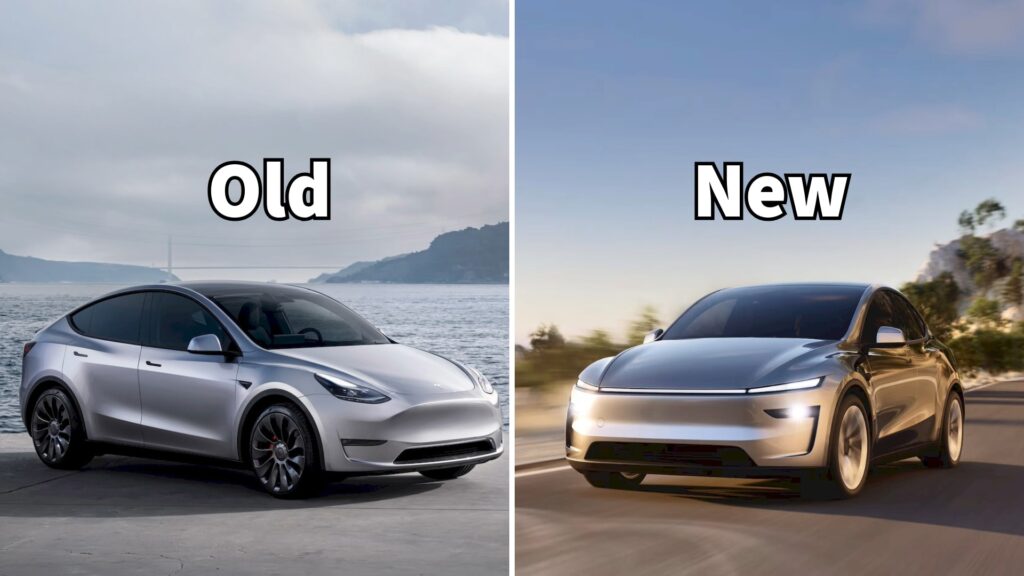
The betrayal here is simple: Tesla knew how to fix the ride quality years ago, but they waited for Juniper to give it to us. Now, your current car feels like a tractor compared to the limousine-like silence of the refresh.
4. The Psychological Stigma: Driving a Relic
In the digital age, cars have become smartphones on wheels. But there is a dark side to this transition. When a new Tesla comes out, the “Legacy” tag isn’t just a technical category; it’s a social stigma.
There is a specific kind of melancholy that comes with standing at a Supercharger, watching a Juniper owner enjoy a silent, smooth experience with ambient lighting and a rear entertainment screen, while you sit in a car that Tesla’s own software team is beginning to deprioritize.
Conclusion: Is it Time to Walk Away?
The Tesla Model Y Juniper is, objectively, a triumph of engineering. It is the car we all thought we were buying three years ago. But for those who already signed the papers and paid the premium, it represents a breach of trust. Tesla’s innovation is breathless and beautiful, but it is also brutal. It respects nothing—not your loyalty, and certainly not your bank account. As fathers, we must ask ourselves: Is the “future” worth the price of our family’s financial stability?
To see the side-by-side technical teardown of exactly how much value your car has lost, watch our latest video analysis.
FAQ
1Q: Should I trade in my HW3 Model Y for a Juniper now?
A: If safety, long-term software support, and a luxury-level ride are your priorities, yes. However, be prepared to swallow a massive depreciation loss.
2Q: Will HW3 still get Full Self-Driving updates?
A: While still supported, HW3 is reaching its limits. We are already seeing AI4-exclusive features that older models will never receive.
3Q: How can I minimize my financial loss?
A: The only way to win is to hold onto your current car as long as possible to amortize the depreciation, or switch to a brand with more stable resale values.
External Links
A detailed engineering breakdown of the HW3 vs HW4 (AI4) gap—including camera resolution and computing capability differences—is summarized here: Model Y Hardware 3 vs Hardware 4 (AI4).
Tesla’s official “New Model Y” overview lists the cabin quietness gains—22% less road noise, 20% less impact noise, and 20% less wind noise—along with chassis and suspension updates: Introducing New Model Y (Official).
Kelley Blue Book’s depreciation data provides a concrete benchmark for how much value a 2022 Model Y has lost over time: 2022 Tesla Model Y Depreciation (KBB).
Tesla’s official Model Y page shows current pricing and trims, including a starting price of $46,630 for Model Y Premium (price includes destination and order fees, excluding taxes and other fees): Model Y Pricing (Official).
Internal links
If you are weighing whether to upgrade to Juniper or switch brands entirely, this side-by-side comparison puts the Model Y against mainstream family SUVs in the same decision bracket: Model Y vs Santa Fe vs CR-V Comparison.
To quantify the real long-term penalty of “legacy hardware,” this breakdown explains how EV maintenance and parts pricing can reshape total ownership cost after the honeymoon period: EV Repair Cost Analysis.
For owners trying to keep an older Model Y longer to amortize depreciation, this guide covers the fastest way to avoid hidden battery stress and premature range loss: Fast Charging and Battery Life Risk.
Author: AutoRep Editorial Team
Inquiries: Tips, corrections, and partnership requests can be submitted via the “Contact” page.
Sources (Official): Global and domestic press releases, and official Korean type approval and environmental certification disclosures.