

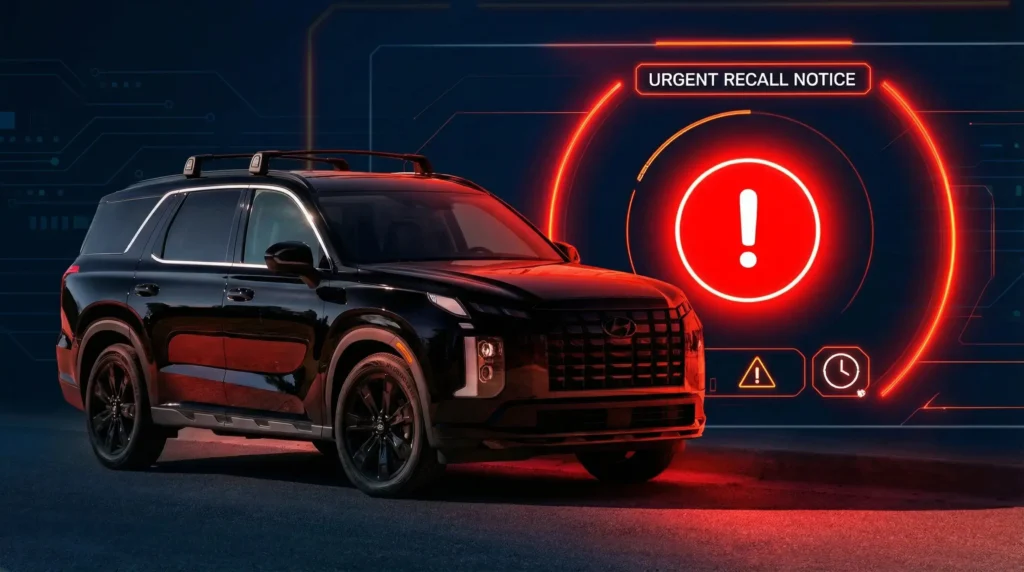
Understanding the 2026 Hyundai Palisade reliability is crucial for every potential buyer, as the new LX3 model arrives with the heavy responsibility of succeeding one of the most popular family SUVs in the North American market. While Hyundai aims to set a new benchmark with a radical design shift and a new 2.5-liter turbocharged hybrid powertrain, concerns regarding the 2026 Hyundai Palisade reliability have already started to surface in automotive circles. Before the LX3 could fully claim its throne, a massive hardware recall and early reports of hybrid software instability have emerged, making a professional report on 2026 Hyundai Palisade reliability from an engineering perspective essential.
1. The Legacy Hardware Burden: NHTSA Recall No. 25V607
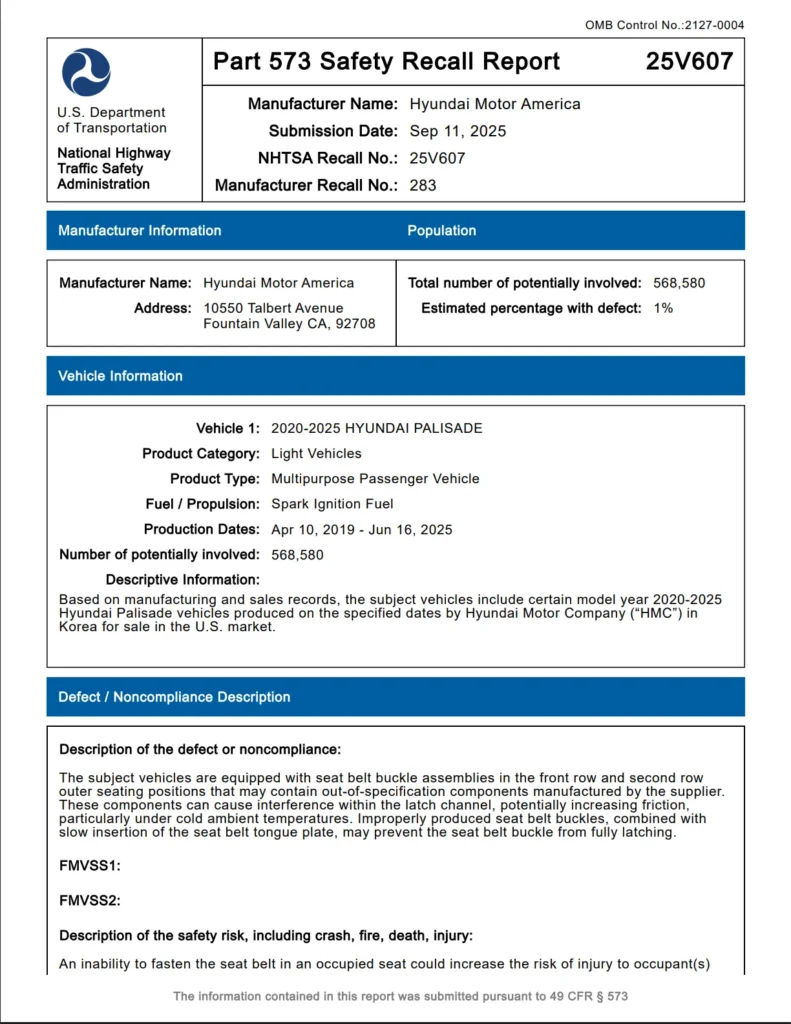
Reliability concerns for the Palisade brand began with a significant hardware failure in the legacy fleet. The National Highway Traffic Safety Administration (NHTSA) recently released Part 573 Safety Recall Report 25V607, encompassing a staggering 568,580 units produced between April 2019 and June 2025.
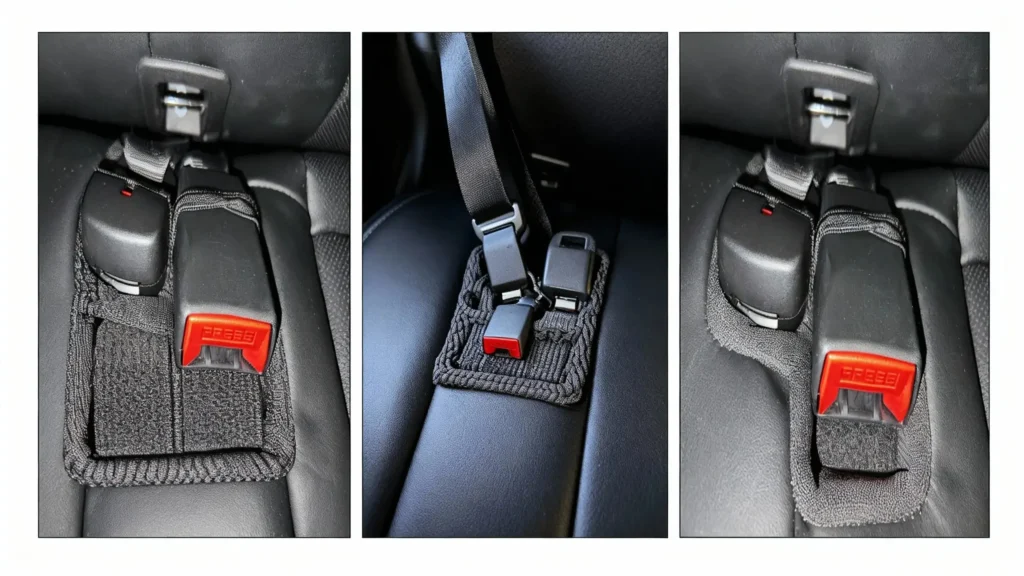
The defect resides in the seatbelt buckle assemblies for the front and second-row seats. Technical documentation reveals that internal latch guides were manufactured out of specification by the supplier, ZF Lifetec. Under certain cold ambient conditions, increased friction within the latch channel prevents the buckle from fully engaging. For a family-oriented vehicle, an inability to guarantee seatbelt latching is a critical failure that strikes at the heart of consumer trust.
2. The Hybrid Frontier: TMED-II and Software Instability
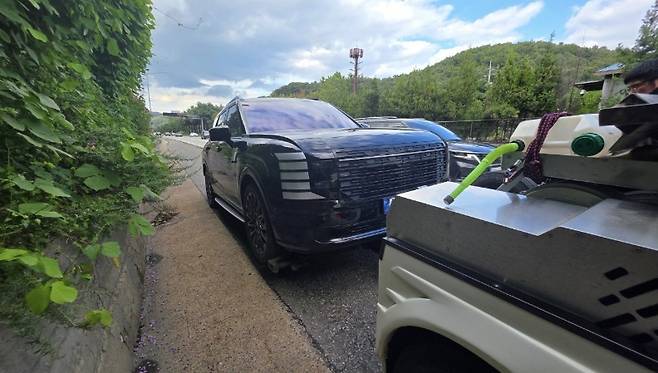
As Hyundai transitions to the new LX3 generation, the spotlight is on the 2.5-liter turbocharged hybrid system. This architecture utilizes the TMED-II (Transmission Mounted Electric Device) system, designed to balance high performance with fuel efficiency.
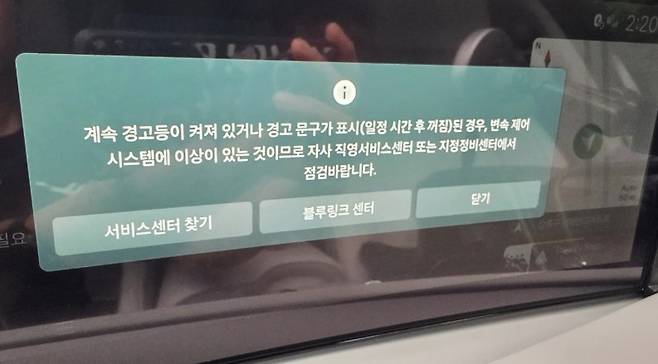
Despite the promising specs, early production units in global markets have reported sudden engine stalling or system-level shutdowns while at cruising speeds. From an engineering standpoint, this stalling is likely linked to the complex synchronization logic between the turbocharged combustion engine and the electric drive motor. When the software detects even a millisecond of torque mismatch, it may trigger a fail-safe mode, cutting power to the wheels to prevent mechanical damage. While modern Software-Defined Vehicles (SDV) can receive Over-The-Air (OTA) updates to fix such issues, the “Beta Tester” perception remains a significant hurdle for early adopters.
3. Engineering Analysis: The Power Density Evolution
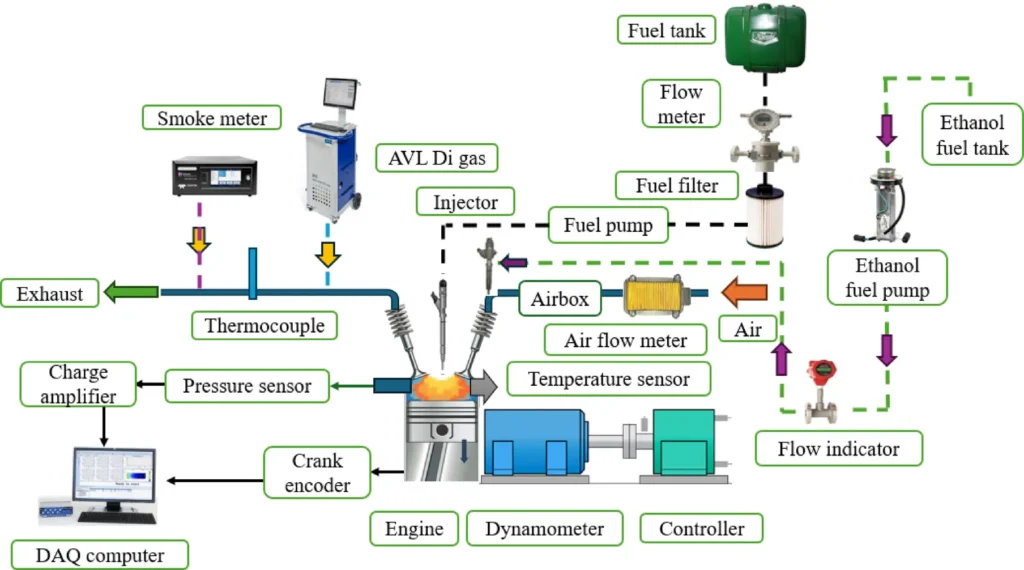
To properly assess whether the move to a smaller hybrid powertrain is a step forward, we must look at the Performance Index. This metric measures how much power an engine produces relative to its displacement, indicating the efficiency of the thermal and mechanical design.
When comparing the legacy 3.8L V6 to the new 2.5T Hybrid, the data is revealing:
Legacy 3.8L V6: 295 hp / 3.8 L ≈ 77 hp/L
New 2.5T Hybrid: 335 hp / 2.5 L ≈ 134 hp/L
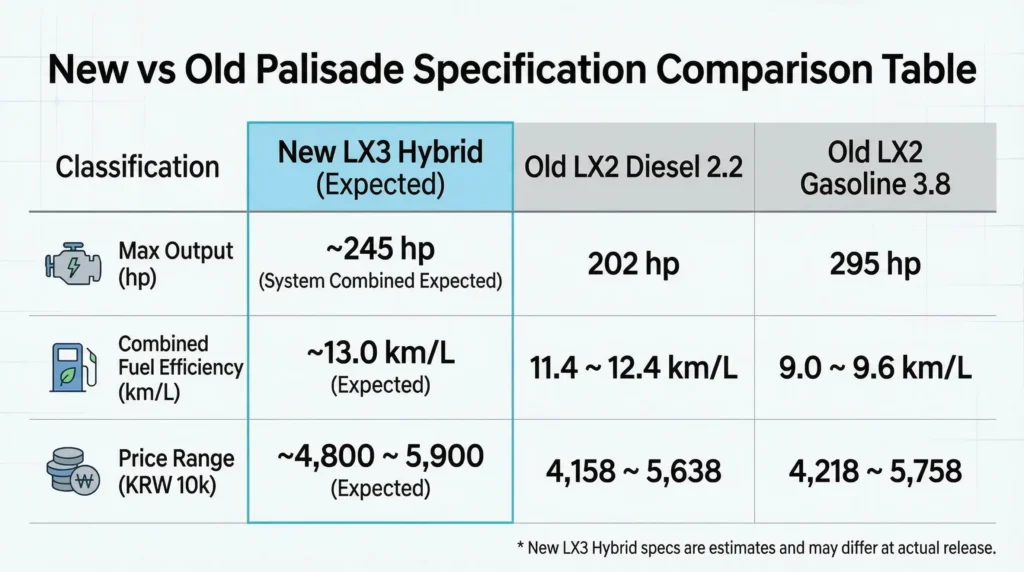
This jump from 77 hp/L to 134 hp/L demonstrates a massive increase in power density. While this efficiency is impressive, the higher stress levels on a smaller displacement engine require much tighter tolerances and more robust software management. The early stalling issues are likely the “growing pains” of managing this high-density power output in a real-world environment.
4. Manufacturing Quality and Supplier Oversight

The seatbelt recall highlights a broader challenge in modern automotive manufacturing: supply chain integrity. The fact that nearly 570,000 units were affected before a manufacturing defect at ZF Lifetec was fully addressed suggests a need for more rigorous quality control audits on third-party suppliers. As vehicles become more complex, the failure of a single out-of-specification plastic guide can lead to global-scale safety risks.
5. Conclusion: Should Global Buyers Trust the 2026 Palisade?
The 2026 Hyundai Palisade LX3 is a technological marvel that offers Genesis-level luxury and class-leading efficiency. However, its reliability record is currently a tale of two halves. The hardware recalls of the past must be fully resolved, and the software logic of the new hybrid powertrain must be stabilized through rapid OTA deployment.
For the cautious buyer, waiting for the mid-year production cycle may be prudent to ensure that the initial software bugs are ironed out. Hyundai’s industry-leading 10-year/100,000-mile warranty remains the primary safety net, providing peace of mind as the flagship SUV undergoes its most significant evolution yet.
❓ FAQ (Frequently Asked Questions)
Q1: Why is the seatbelt recall affecting so many Palisade units?
A1: The recall affects 568,580 units because the manufacturing defect at the supplier, ZF Lifetec, persisted across several model years from 2020 to 2025 before being fully identified and corrected.
Q2: What is causing the sudden stalling in the new 2026 Hybrid models?
A2: Preliminary reports suggest the stalling is due to software synchronization errors within the TMED-II hybrid system, specifically when managing the transition between electric and combustion power under high-load conditions.
Q3: Is the 2.5T Hybrid more powerful than the old 3.8L V6?
A3: Yes, despite having a smaller engine, the 2.5T Hybrid produces approximately 335 total system horsepower, compared to the 295 hp of the legacy V6, offering significantly higher power density.
External Links
1. Hyundai’s official recall listing is available in the NHTSA Recall No. 25V607 database entry.
2. details behind the defect and remedy, refer to the Part 573 Safety Recall Report (25V607) PDF.
3. A consumer-facing summary of the 568,580-vehicle recall is also covered by Kelley Blue Book.
4. Car and Driver breaks down why the issue impacts more than 500,000 Palisades and what owners should do next.
Internal links
1. If you want a side by side packaging and family usability comparison, see the Palisade LX3 vs Ioniq 9 comparison review.
2. For a quick buyer oriented summary that balances strengths and drawbacks, read the 2026 Palisade pros and cons.
3. To evaluate the most direct cross shop alternative in the same segment, check the 2026 Hyundai Palisade LX3 vs Kia Telluride comparison.
Author: AutoRep Editorial Team
Inquiries: Tips, corrections, and partnership requests can be submitted via the “Contact” page.
Sources (Official): Global and domestic press releases, and official Korean type approval and environmental certification disclosures.