

This 2027 Kia Telluride Technical Analysis provides a deep dive into the engineering evolution of the LQ2, focusing on its revolutionary 329 hp Turbo Hybrid powertrain and enhanced off-road architecture.
[Section 1: The Strategic Transition from V6 to Turbocharged Efficiency]

The 2027 Kia Telluride marks a significant departure from its heritage by discontinuing the 3.8L V6 naturally aspirated engine. This transition to a 2.5-liter turbocharged inline-four architecture is not merely a downsizing exercise but a strategic optimization of the torque curve.
1. Standard ICE Performance: The 2.5T GDI produces 274 horsepower and 311 lb-ft of torque.
2. Torque Advantage: The new turbocharged configuration provides approximately 50 lb-ft more torque than the outgoing V6, representing a 19% improvement in low-end responsiveness.
3. Drivetrain Integration: Power is managed through a refined 8-speed automatic transmission designed to handle the increased thermal loads of the turbocharged system.
[Section 2: High-Displacement Hybrid Powertrain Architecture]
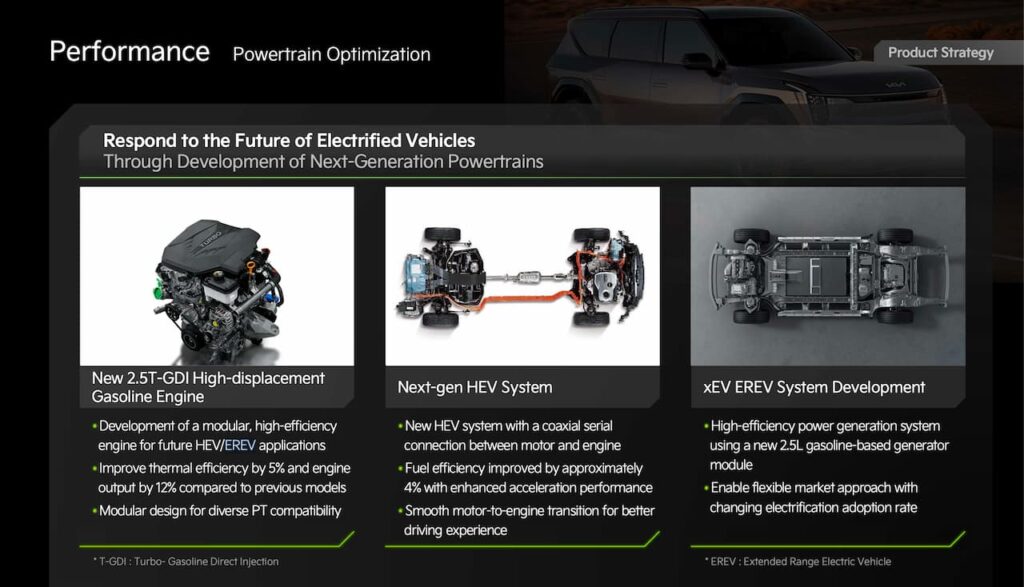
The flagship innovation for the LQ2 generation is the 2.5L Turbo Hybrid system. This powertrain utilizes a modular, high-efficiency engine base specifically developed for high-output electrified applications.
1. System Synthesis: The combined output of the 2.5T engine and dual electric motors reaches 329 horsepower and 339 lb-ft of torque.
2. Thermal Efficiency: The engine features a 5% improvement in thermal efficiency and a 12% increase in output compared to previous generation hybrid units.
3. Operational Range: The system achieves a combined 35 MPG, enabling a total range exceeding 600 miles (965 km) on a single tank.
4. Dynamic Control: Electronic Dynamic Torque Vectoring Control modulates independent braking and motor output to optimize cornering stability.
[Section 3: Mechanical Engineering of the X-Pro Capability]
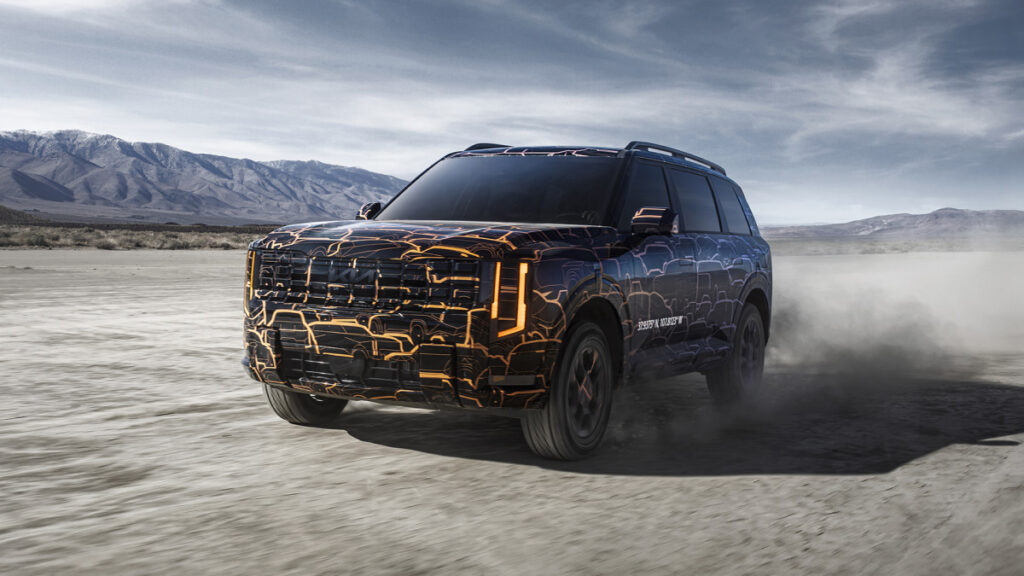
The X-Pro variant is engineered for legitimate off-road utility, utilizing structural enhancements that differentiate it from standard cosmetic trim levels.
1. Suspension Geometry: Exclusive suspension tuning provides 9.1 inches of ground clearance, a 0.7-inch increase over the previous generation’s peak height.
2. Chassis Integration: Front and rear recovery points are frame-mounted steel units, ensuring structural integrity during high-load recovery operations.
3. Utility Metrics: The vehicle retains a 5,000 lbs towing capacity, supported by a factory-installed tow hitch integrated directly into the chassis and electronics.
[Section 4: Dimensional Growth and Aerodynamic Precision]

The redesign includes a radical expansion of the vehicle’s footprint to enhance ride quality and interior volume.
1. Wheelbase Expansion: The wheelbase has been extended by nearly 3 inches (7.6 cm), significantly improving high-speed directional stability.
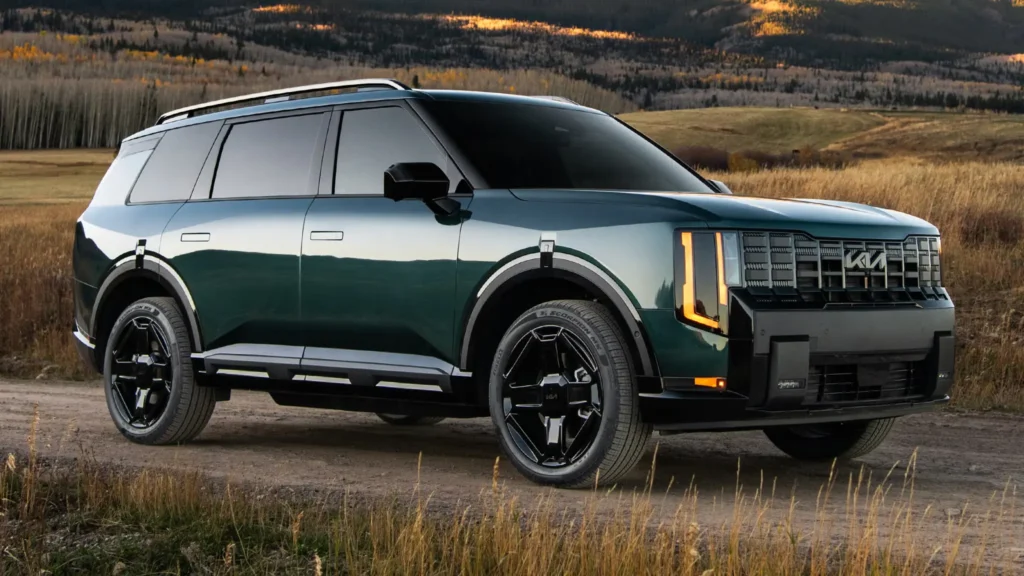
2. Chiseled Design Language: The “Opposites United” philosophy incorporates triangular wheel arch facets inspired by diamond geometry, providing a mechanical and precise aesthetic.
3. Aerodynamic Efficiency: Flush-mounted door handles reduce wind turbulence, contributing to a lower drag coefficient despite the vehicle’s boxy profile.
[Section 5: The Technological Sanctuary and ccNC Integration]
The interior architecture, termed the “Dreamer’s Sanctuary,” prioritizes digital integration and acoustic serenity.
1. Digital Hub: A panoramic curved display houses dual 12.3-inch screens powered by the Connected Car Navigation Cockpit (ccNC).
2. Data Connectivity: 5G-enabled Entertainment Data Services support native streaming for Netflix, Disney+, and YouTube.
3. Operational Efficiency: The “Stay Mode” feature allows for the operation of HVAC and infotainment systems for 20 minutes without engaging the internal combustion engine.
4. Safety Engineering: A stiffer body structure is complemented by 10 standard airbags and a comprehensive suite of 21 ADAS features.
[Section 6: Conclusion and Global Market Outlook]
The 2027 Kia Telluride represents the pinnacle of Kia’s internal combustion and hybrid engineering. By replacing the V6 with a more torque-efficient 2.5T Hybrid, Kia has successfully balanced stringent emissions standards with the performance demands of the North American SUV market. The vehicle is scheduled for North American market entry in Q1 2026, with assembly continuing at the West Point, Georgia facility. For the domestic Korean market, structural labor agreements and production protectionism for the Palisade (LX3) currently preclude official importation.
🤔 [AutoLab Global] Reader Q&A: Clearing the Smoke
Q1. Does the 2027 Telluride still offer a V6 engine? A1. No, the 3.8L V6 has been discontinued. It is replaced by a 2.5L Turbocharged engine (274 hp) and a high-performance 2.5L Turbo Hybrid system producing 329 horsepower.
Q2. What are the specific off-road upgrades for the X-Pro trim? A2. The X-Pro features an exclusive suspension with a 9.1-inch ground clearance and frame-mounted steel recovery points designed for genuine recovery operations, not just aesthetics.
Q3. What is the fuel efficiency and range of the Telluride Hybrid? A3. The 2.5L Turbo Hybrid achieves an estimated 35 MPG combined and offers a total driving range of over 600 miles (approx. 965 km) on a single tank.
External Links
For official model positioning and the “next-generation” overview, visit Kia’s The all-new 2027 Telluride page.
For downloadable official press assets (photos and videos) for editorial use, use the 2027 Telluride Photos & Videos gallery.
For factory B-roll download (web MP4 and broadcast MOV), reference the 2027 Telluride X-Pro B-Roll page.
For an official timeline anchor tied to the model’s debut, cite Kia America’s 2027 Telluride teaser press release.
For confirmed U.S. production location and plant context, refer to Kia Georgia’s “The Plant” page.
Internal links
For a direct platform rival context and packaging trade-offs, see the comparison in 2026 Hyundai Palisade (LX3) vs Kia Telluride.
For long-term ownership angles that pair well with your “V6 to turbo-hybrid” transition framing, connect to 2026 Hyundai Palisade reliability report.
For the “mechanical implications” section and total cost discussion (turbo heat management, hybrid complexity), link to EV repair cost analysis.
🌐 Auto Lab Editorial Signature
✍️ Editor’s Note Produced & Analyzed by: Auto Lab Strategic Analysis Team
Data Sources: Official global manufacturer press releases and public certification data from the Ministry of Environment (ME) and the Ministry of Land, Infrastructure and Transport (MOLIT).
Auto Lab goes beyond simple news reporting to analyze the truth hidden within the data. We hope this content serves as a valuable roadmap for your smart and rational automotive lifestyle.
📢 Explore in-depth analysis beyond the text on [Auto Lab TV]. ^^*