


Introduction: Beyond the 4 Million Milestone
The global automotive industry is witnessing a seismic shift, and the epicenter is Tesla Gigafactory Shanghai. On December 8, 2025, Giga Shanghai officially produced its 4 millionth vehicle, a feat that underscores Tesla’s dominance in the EV sector. However, the true significance of this milestone lies in the Tesla China Manufacturing Revolution—a radical overhaul of how cars are conceived, built, and delivered.
By targeting a production rhythm of 4.5 seconds per vehicle, Tesla is not just outperforming competitors; it is rendering their manufacturing models obsolete. This deep dive explores the technological pillars that allow Giga Shanghai to operate at the speed of thought.
1. Giga Press: Transforming Molten Metal into Competitive Advantage
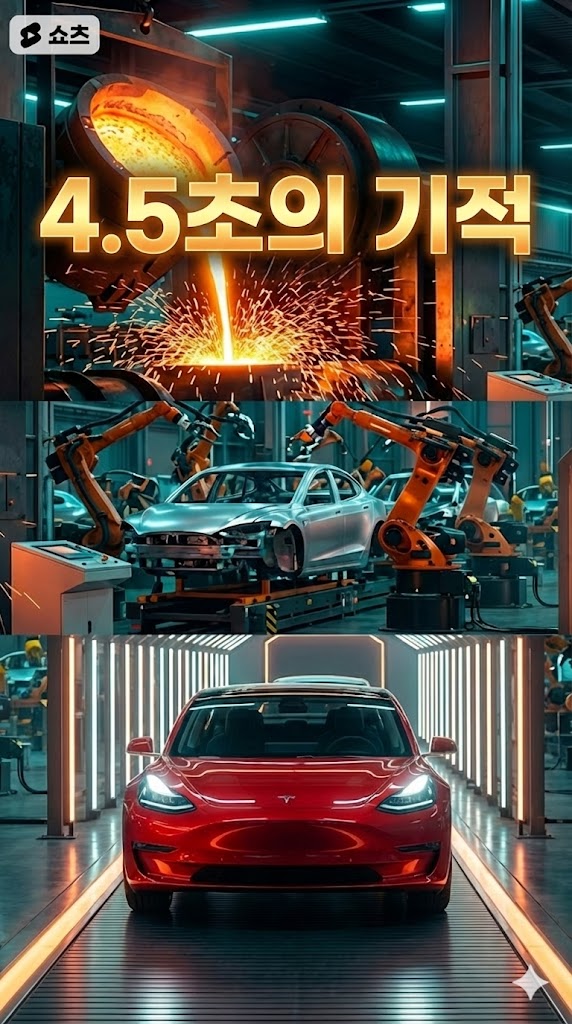
At the heart of the Tesla China Manufacturing Revolution is the Giga Press. Traditional car manufacturing involves welding together over 70 individual metal pieces to form the rear underbody. This “old world” method is slow, heavy, and prone to structural variances.
Tesla’s Giga Press technology in Shanghai utilizes high-pressure die-casting to turn molten aluminum into a single, massive structural component in seconds.
1. Weight Reduction: By eliminating hundreds of bolts and welds, the chassis becomes significantly lighter, directly extending battery range.
2. Cost Efficiency: Reducing the parts count by dozens of components drastically lowers the Bill of Materials (BOM) and capital expenditure on welding robots.
3. Precision: Single-piece casting ensures near-perfect alignment, a critical factor for the high-speed assembly lines of the future.
2. The Unboxed Process: Parallel Assembly at the Speed of Light
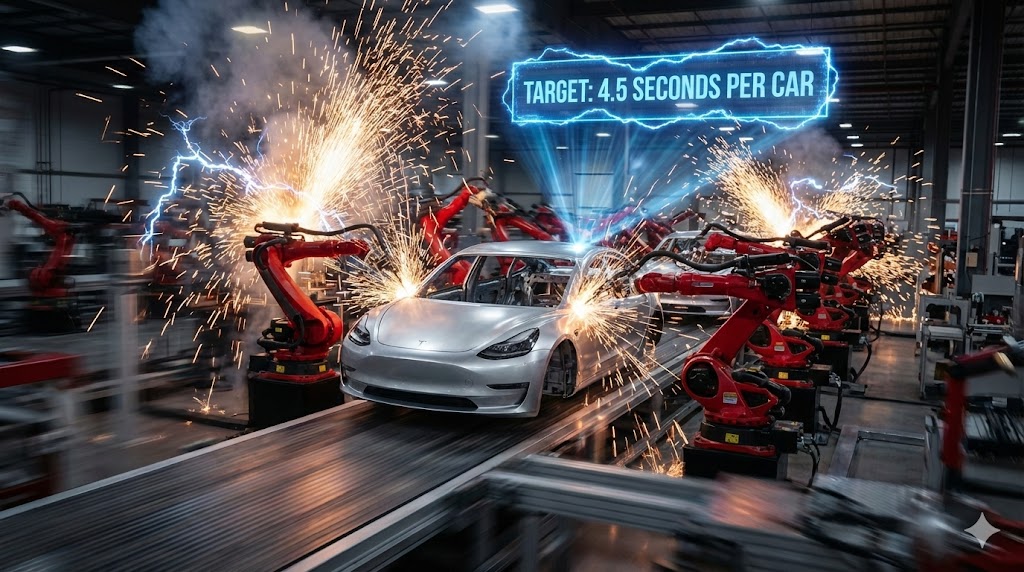
The Tesla China Manufacturing Revolution reached its zenith with the introduction of the Unboxed Process. For over a century, the industry followed the linear assembly model pioneered by Henry Ford. Tesla has discarded this map.
Instead of a car moving down a single, long line, the Unboxed Process divides the vehicle into six independent modules. These modules are worked on simultaneously by specialized robot clusters in parallel.
1. 40% Reduction in Footprint: By working on modules separately, Tesla can fit more production capacity into a smaller factory area.
2. Maximized Throughput: The final “marriage” of these six modules takes only a fraction of the time compared to traditional final assembly.
3. Scalability: This is the foundation for the Model 2 (Project Redwood), enabling Tesla to produce millions of affordable EVs without the bottlenecks of conventional manufacturing.
3. Vertical Integration and the Battery Synergy
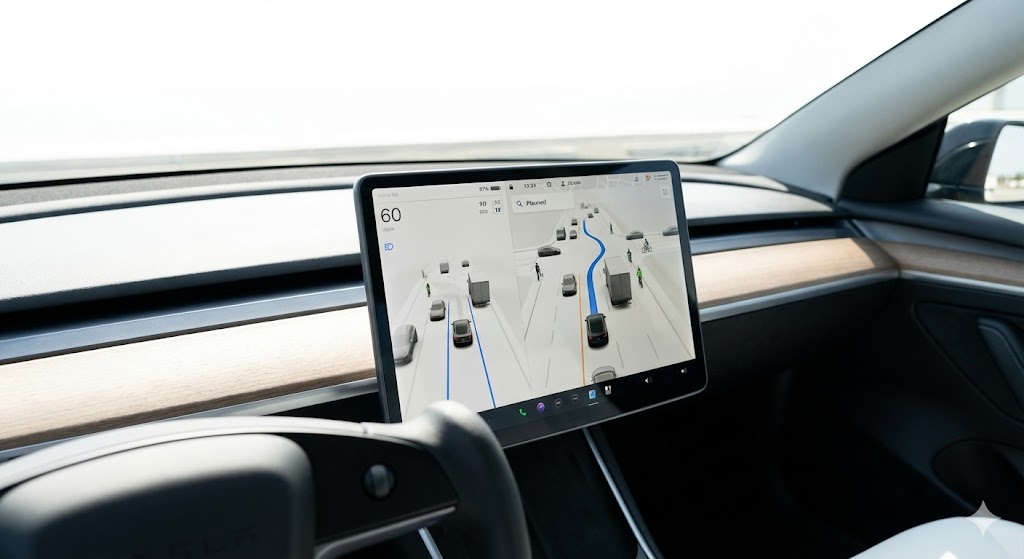
In Shanghai, Tesla sits at the center of the world’s most advanced battery ecosystem. The Tesla China Manufacturing Revolution leverages this proximity to implement Structural Battery Pack technology.
By making the battery pack a stressed member of the vehicle’s frame, Tesla eliminates the need for a separate floor structure. This synergy with local giants like CATL and BYD ensures a steady stream of high-energy-density LFP (Lithium Iron Phosphate) cells at the lowest possible cost.
Furthermore, Tesla’s centralized software architecture allows the vehicle to be “born” digital. While legacy cars struggle with miles of redundant wiring, a Tesla produced in Shanghai uses a streamlined electronic backbone, allowing for rapid software flashing and immediate FSD (Full Self-Driving) calibration on the line.
4. Autonomous Delivery: The Death of Traditional Logistics
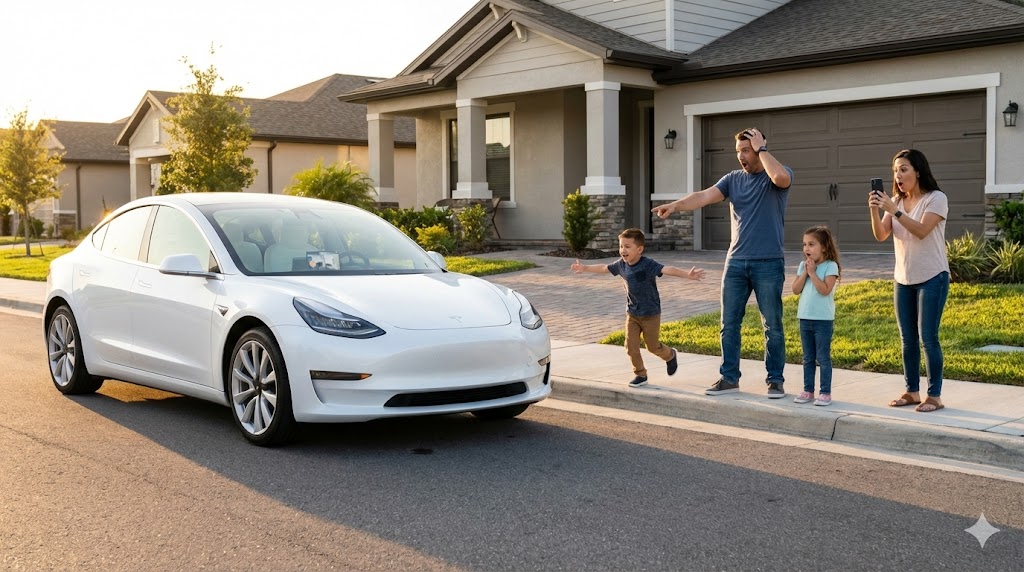
The most disruptive aspect of the Tesla China Manufacturing Revolution happens after the car leaves the factory floor. Tesla is moving toward a future of Autonomous Delivery.
Traditionally, delivering a car involves expensive transporters, complex logistics networks, and high-margin dealerships. Tesla is cutting these out entirely. Using advanced FSD data and China’s robust infrastructure, Tesla envisions a world where a car drives itself from the factory directly to the customer.
1. Zero Logistics Cost: Eliminating human drivers and trucks from the delivery equation saves thousands of dollars per unit.
2. Immediate Gratification: A car ordered online could theoretically be in the customer’s driveway within hours of completion.
3. Ultimate Brand Proof: There is no greater demonstration of FSD capability than having your new car navigate itself from the assembly line to your home.
5. Conclusion: The Dawn of the 25,000 Dollar EV
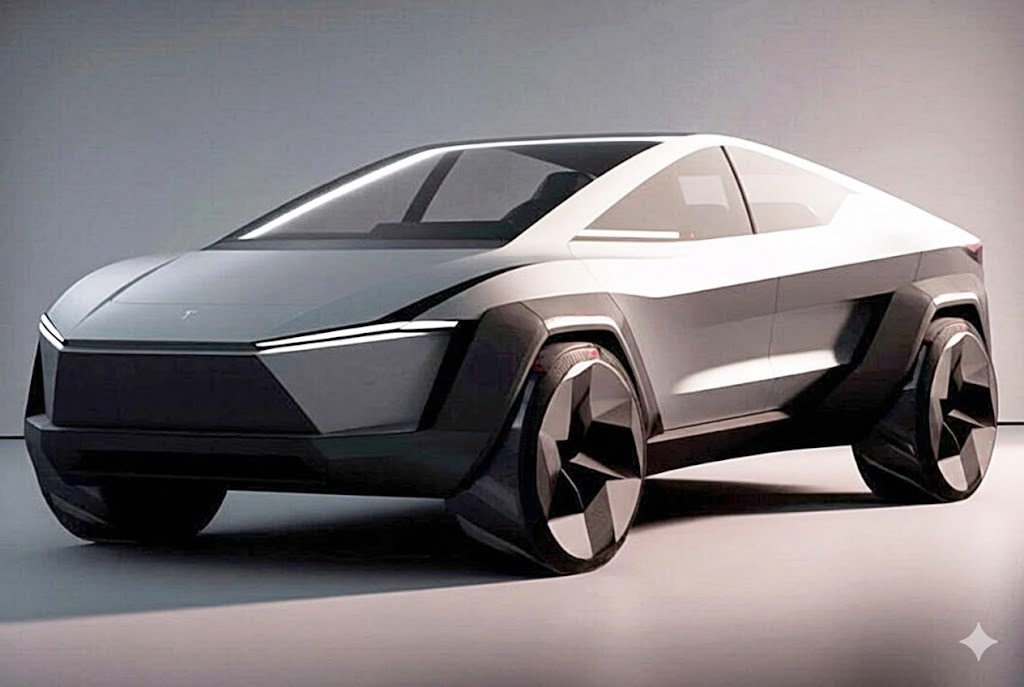
The cumulative effect of the Giga Press, the Unboxed Process, and Autonomous Delivery is the realization of the 25,000 dollar Tesla Model 2.
The Tesla China Manufacturing Revolution has proven that high technology and low cost are not mutually exclusive. As Giga Shanghai continues to break its own records, the manufacturing gap between Tesla and the rest of the world is widening into a canyon. Tesla is no longer just a car company; it is an AI-driven manufacturing machine that is printing the future of transportation, 4.5 seconds at a time.
FAQ 3 Questions
Q1. How does Tesla China achieve a 4.5-second production speed? Tesla utilizes the Giga Press for massive underbody casting and the Unboxed Process for parallel assembly, reducing thousands of steps into a streamlined, automated flow at Giga Shanghai.
Q2. Why is Giga Shanghai critical for the 25,000 dollar Tesla Model 2? The ultra-efficient supply chain in China, combined with structural battery integration and zero-cost autonomous delivery, allows Tesla to reach a price point unattainable by legacy manufacturers.
Q3. What is Tesla’s Autonomous Delivery system in China? It is a vision where a vehicle, upon completion, uses FSD technology to drive itself from the factory directly to the customer’s home, eliminating traditional logistics and dealership costs.
External link
For official coverage of Giga Shanghai’s 4-millionth vehicle milestone (Dec 8, 2025), see Xinhua’s report. Xinhua
For a mainstream recap of how fast Shanghai has scaled (including recent output cadence references), read China Daily’s write-up. China Daily
For Tesla’s own presentation that introduced next-gen manufacturing concepts (including the “unboxed” direction at Investor Day), watch Tesla’s 2023 Investor Day video. assemblymag.com
For an industry overview of Tesla’s “Unboxed” assembly concept as described via patent coverage, see Assembly Magazine’s summary. assemblymag.com
For a current-news checkpoint on Shanghai’s 2025 production ramp context, refer to Reuters’ report on the Q4 ramp-up. Reuters
For Tesla’s official video hub (useful when you want manufacturer-hosted clips outside YouTube), browse Tesla’s Videos page. Xinhua
Internal link
To understand how Tesla’s modular “Unboxed” build enables a true affordable compact EV, read Tesla Unboxed Process and Model 2 analysis.
For a mass-production roadmap comparison in the EV-van space (and why scale changes unit economics), see Kia PV5 mass production lineup roadmap in Korea.
For the competitive context behind Tesla’s cost-down push (especially against BYD), check Tesla vs BYD defeat and Musk risk analysis.
작성자: AutoLab Editorial Team
문의: Tips, corrections, and partnership inquiries can be submitted via the “Contact” page.
출처(공식): Global and domestic press releases, and official Korean type approval and environmental certification disclosures.