
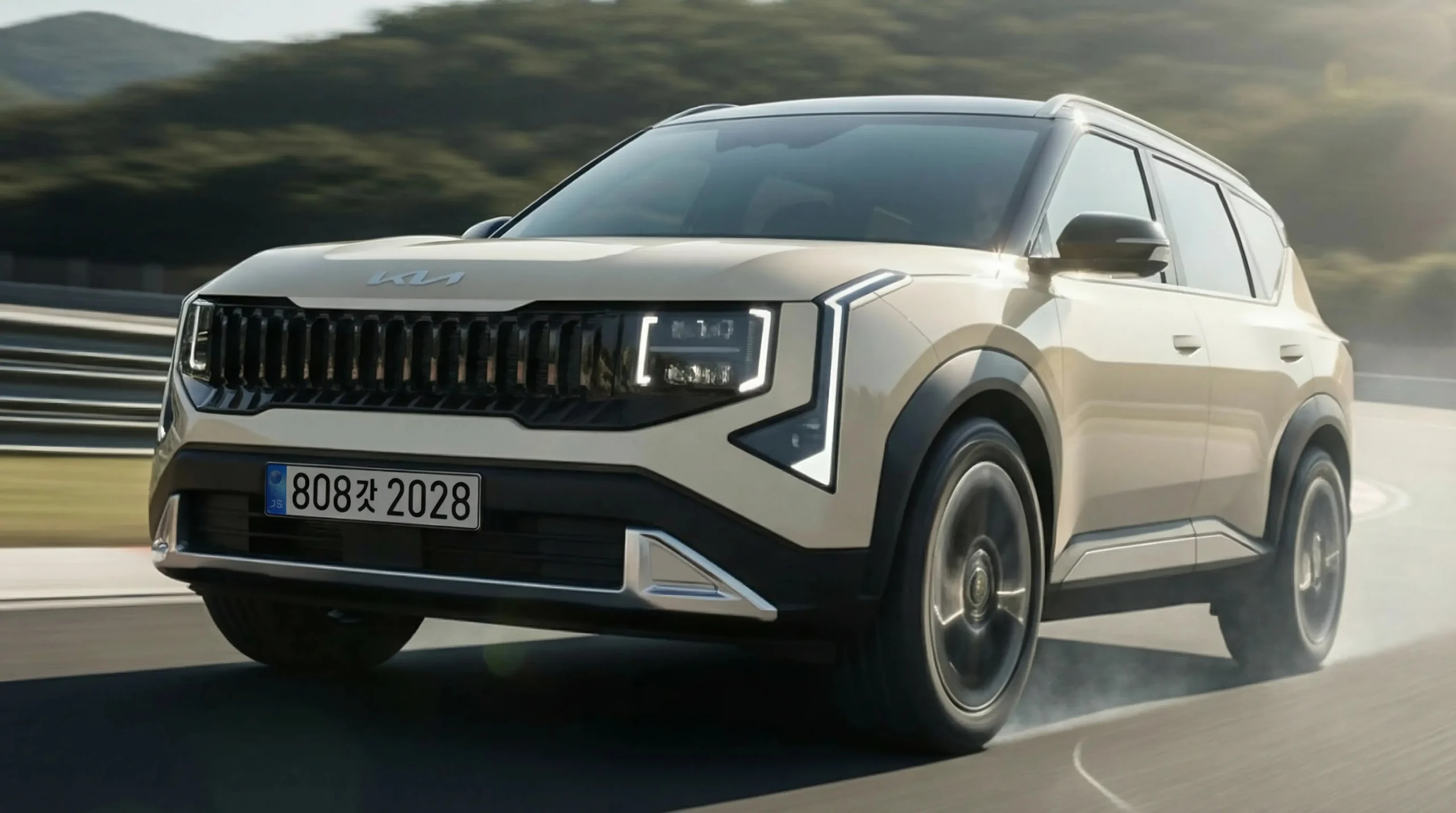
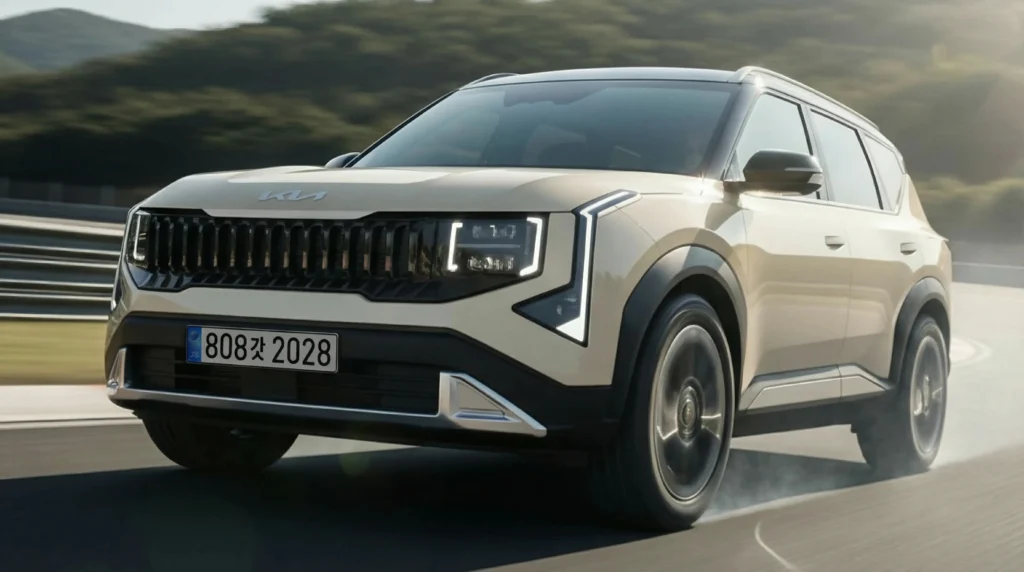
In the bustling landscape of the compact SUV market, the Kia Seltos has carved out a significant niche. However, with the imminent arrival of the new generation, many potential buyers are closely scrutinizing the Kia Seltos SP3 Price and Problems before making a decision. While Kia is executing a sophisticated shift in strategy by borrowing the flagship EV9’s design DNA—featuring “Star-map” signature lighting and a futuristic interior—it’s marketed as a “Premium” evolution that comes with a much steeper cost.
But before you are seduced by the glittering LED lights and curved displays, you need to understand the cold, hard data lurking beneath the surface regarding the Kia Seltos SP3 Price and Problems. This is not a simple facelift; it’s a calculated repositioning designed to maximize profit margins at your expense. As a global automotive analyst, I have conducted a rigorous audit of the Seltos SP3, crossing international pricing structures, engineering specifications, and technical diagrams to uncover the truth behind the Kia Seltos SP3 Price and Problems.
The conclusion is stark: The Seltos SP3 is a masterclass in automotive gaslighting. Behind the facade of “luxury,” five brutal truths await unsuspecting buyers. This article will dissect the reality of the Kia Seltos SP3 Price and Problems, using undeniable evidence to prove that what Kia is selling isn’t just a car—it’s a very expensive illusion.
1. The Great Global Price Disparity: Are You the “Cash Cow”?
The most glaring evidence of Kia’s strategic manipulation lies in its global pricing structure. A direct comparison between the Indian market—one of the world’s largest and most price-sensitive for compact SUVs—and other global markets reveals a shocking disparity that cannot be explained by taxes or logistics alone.
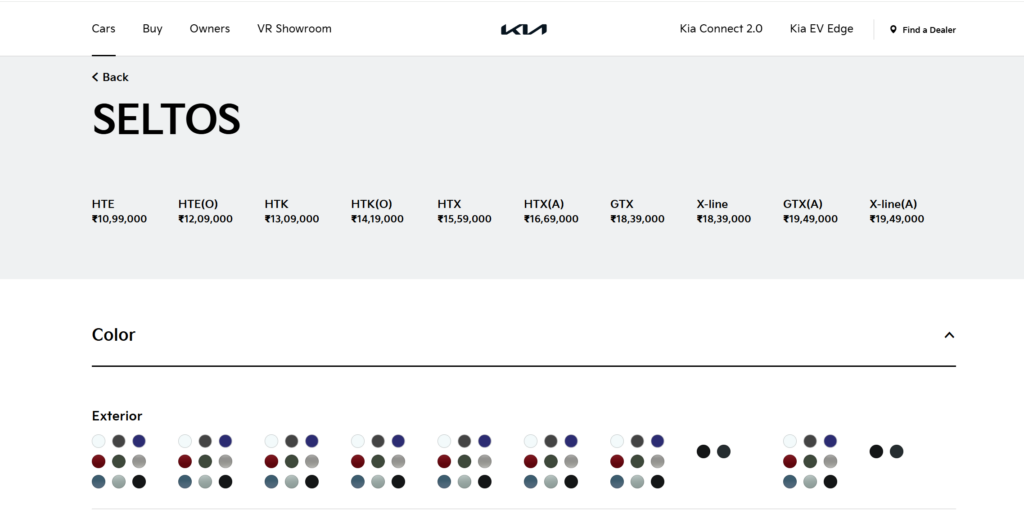
As the official price list from Kia India demonstrates (Image 2), the Seltos begins at an incredibly accessible ₹1,099,000. This is approximately $13,200 USD. At this price point, the Seltos is a compelling value proposition, offering a spacious and well-designed vehicle for the masses.
However, in other key markets like South Korea and North America, the starting price for the upcoming SP3 model is projected to begin at $25,000 USD or higher. This represents a staggering $11,800 price gap. Where does this premium come from? Kia will argue that it’s due to advanced features and better powertrains. But the reality is a strategy of “Forced Upselling” by Deleting Entry-Level Trims.
In India, consumers have the choice of an ‘HTE’ base trim, which provides the essential car without the expensive frills. In premium markets, Kia has systematically eliminated these base models. For the SP3, they are making high-cost components like the dual 12.3-inch ccNC curved display and full ADAS suites “standard equipment.”
This isn’t generosity; it’s a trap. By removing the option for a basic model, Kia forces you to pay for features you might not want or need, effectively locking the entry price at a much higher tier. You are paying an $11,800 premium not for “better quality,” but for the removal of your choice to be frugal. This strategy turns consumers in these markets into the company’s primary “cash cows,” subsidizing the lower margins elsewhere.
2. The Physics of Platform: A $40,000 Car on a Budget Skeleton
Kia’s marketing machine is working overtime to blur the lines between the compact Seltos and its larger sibling, the Sportage. With prices for a top-trim Seltos SP3 Hybrid expected to flirt with the $40,000 mark, many buyers will find themselves cross-shopping between a fully-loaded Seltos and a mid-trim Sportage.
This is where marketing collides with the immutable laws of physics.
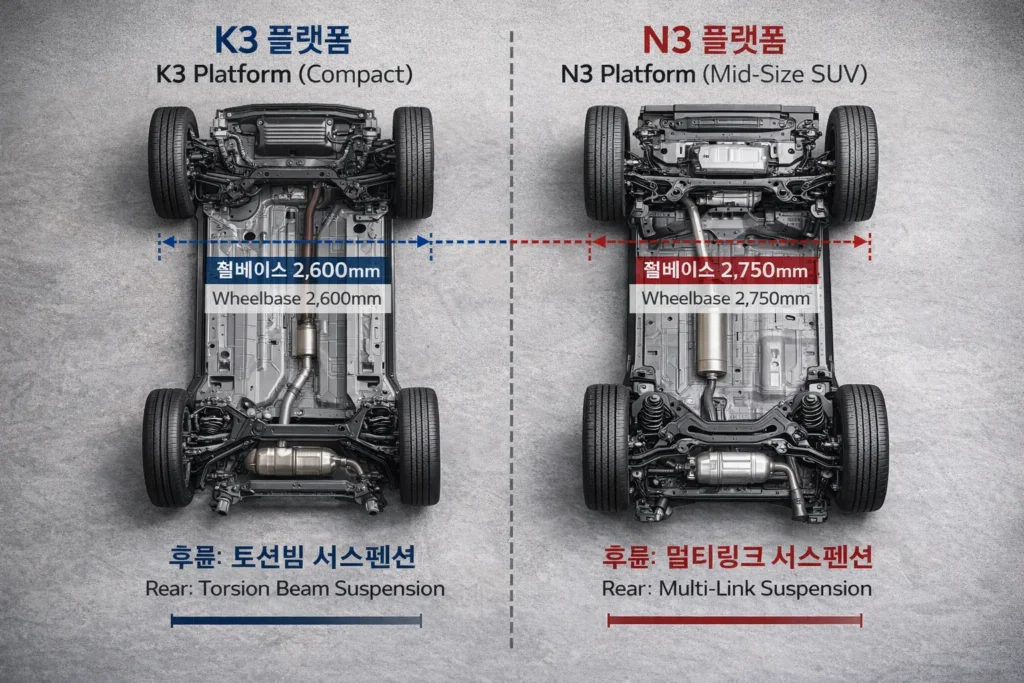
The visual evidence is undeniable (Image 3). The Seltos is built on Kia’s K3 platform (Small/Compact), while the Sportage utilizes the N3 platform (Mid-Size). This isn’t just a difference in name; it’s a fundamental difference in engineering architecture that no amount of leather or ambient lighting can overcome.
1. Wheelbase & Ride Quality: The N3 platform has a significantly longer wheelbase and wider track. This directly translates to superior ride comfort, better stability at high speeds, and more composed handling over rough surfaces. The compact K3 platform, by its very nature, will feel more “busy” and less settled.
2. Suspension & NVH: Larger platforms like the N3 allow for more sophisticated suspension geometries (like standard multi-link rear suspension across more trims) and more extensive use of sound-deadening materials. A Seltos, even at $40,000, is still limited by the NVH (Noise, Vibration, and Harshness) constraints of its budget-car roots.
Paying Sportage prices for a Seltos means you are paying a premium for “Perception”—the look of luxury—while sacrificing the “Physical Reality” of a superior driving experience and engineering foundation. It’s a classic case of paying for the frosting and getting a smaller cake.
3. The e-AWD Maintenance Time Bomb: Saving Fuel, Losing a Fortune
The introduction of a Hybrid powertrain in the Seltos SP3 is being hailed as a major leap forward in efficiency. For those opting for the all-wheel-drive version, Kia is introducing an e-AWD (Electronic All-Wheel Drive) system. On paper, it sounds high-tech and efficient. In the long run, it’s a financial landmine waiting to be stepped on.
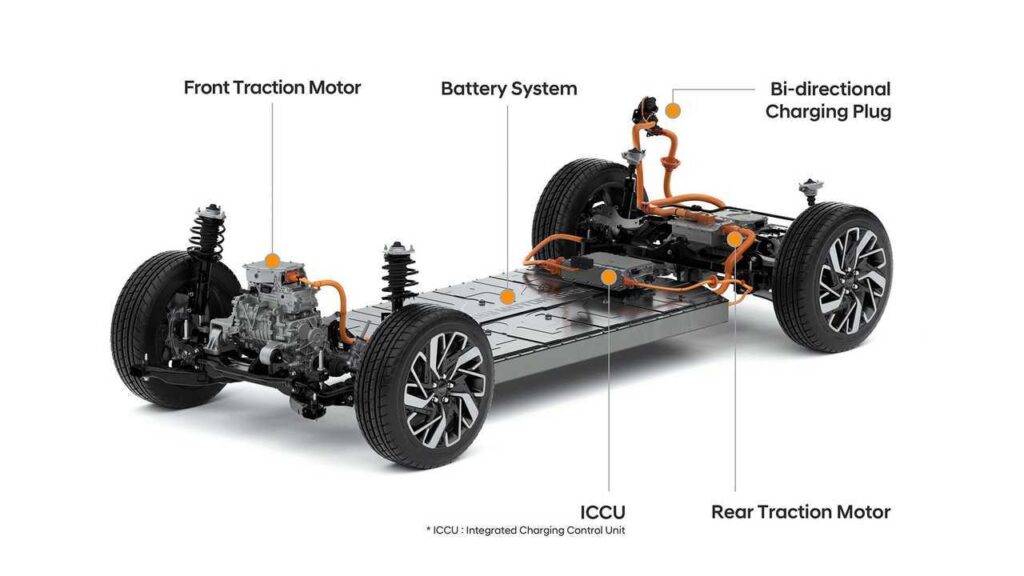
Unlike traditional mechanical AWD systems that use a driveshaft to send power to the rear wheels, the e-AWD system (similar in concept to the complex electric architectures shown in Image 4) eliminates the physical connection. Instead, it adds a separate electric motor, a high-voltage inverter, and a dedicated control unit to the rear axle.
1. The Complexity Trap: You have just doubled the number of potential failure points in your drivetrain. You now have a gas engine, a front hybrid motor, a transmission, and a completely independent rear electric drive system.
2. The Repair Bill Nightmare: What happens when this complex system fails out of warranty? A rear-end collision that would have been a simple bumper repair on a FWD car could now damage the sensitive rear motor or inverter, leading to a four-figure repair bill. Even a simple sensor failure within the rear drive unit could require the replacement of the entire assembly.
The fuel savings you might accumulate over five years of ownership could easily be wiped out by a single out-of-warranty repair to this complex e-AWD system. For the average driver doing under 15,000km a year, the financial risk far outweighs the fuel-saving reward.
4. The ccNC Nightmare: A Digital “Single Point of Failure”
The interior of the SP3 is dominated by Kia’s new ccNC (connected car Navigation Cockpit) system. It’s a massive, curved panoramic screen that looks straight out of a sci-fi movie. Kia touts its seamless integration and Over-the-Air (OTA) update capabilities.
But automotive history has taught us that high-tech integration comes with a high-stakes downside.
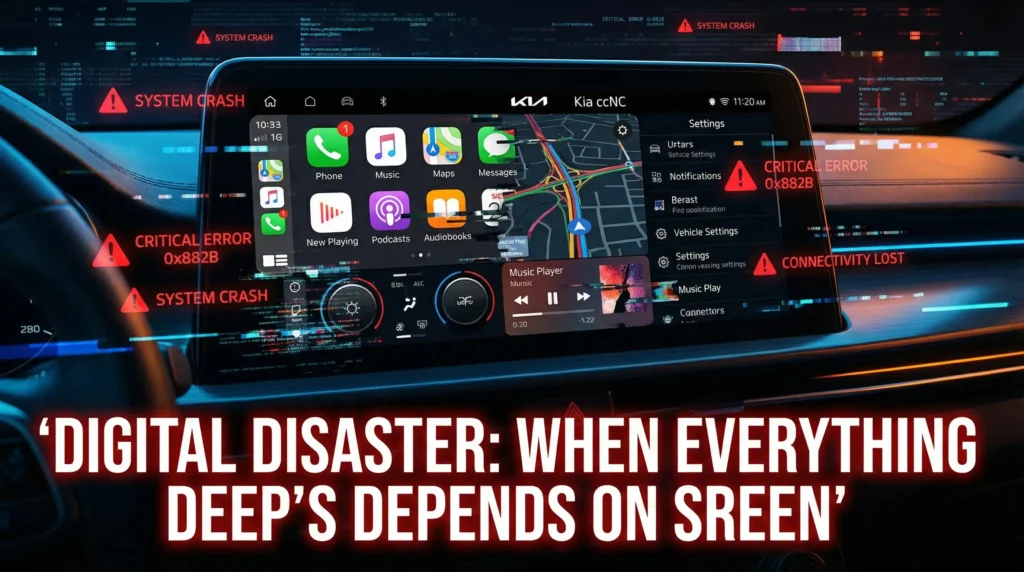
The ccNC system is a textbook example of a “Single Point of Failure.” By integrating almost every vehicle function—from media and navigation to climate control settings and vehicle settings—into one central digital hub, Kia has created a scenario where a single glitch can cripple the entire car’s interface.
As seen in real-world examples (Image 5), when these complex systems crash, you don’t just lose your radio. You lose your ability to control the AC, see your navigation, and adjust vehicle settings. And because these systems are so deeply integrated, a botched OTA update could potentially brick the unit, requiring a tow to the dealership.
Furthermore, the long-term reliability of these massive touchscreens in extreme heat and cold is yet to be proven. Replacing a dual 12.3-inch curved display panel out of warranty will not be a cheap fix. You aren’t just driving a car anymore; you are driving a very expensive, non-upgradable tablet that is crucial to the car’s operation.
5. The Mini-EV9 Strategy: Paying for “Design DNA,” Not Performance DNA
Finally, we must address the elephant in the room: the design. The SP3’s most striking feature is its uncanny resemblance to Kia’s flagship electric SUV, the EV9.
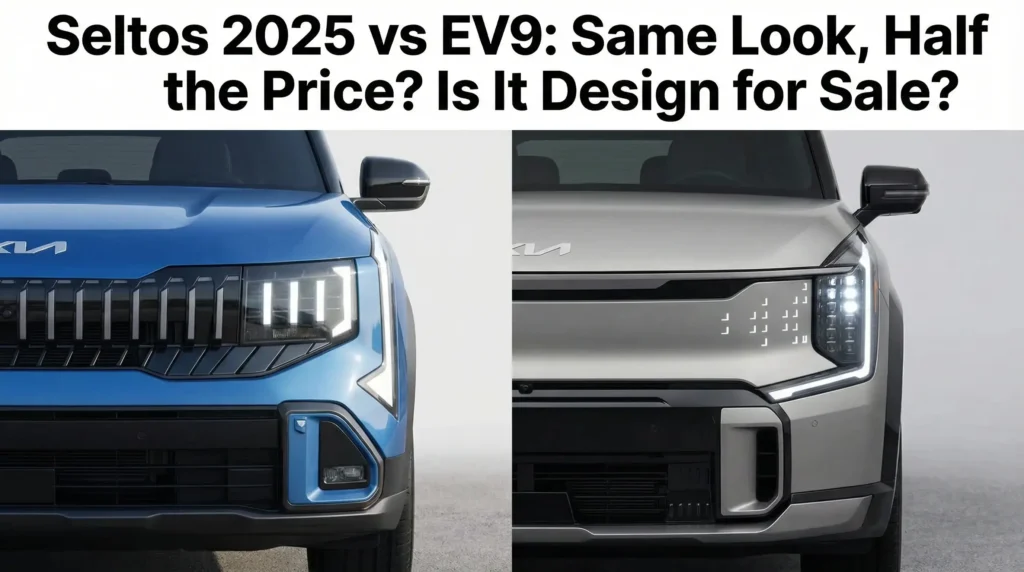
This side-by-side comparison (Image 6) is not a coincidence; it’s a calculated psychological marketing tactic. Kia knows that the EV9 is perceived as a high-tech, premium vehicle with an $80,000 price tag. By grafting its signature “Star-map” lighting and boxy aesthetic onto the compact Seltos, they are creating a “Halo Effect.”
They want you to subconsciously associate the Seltos with the prestige and technology of the EV9. But here’s the brutal truth: “Design DNA” is not “Performance DNA.”
The Reality: Underneath that futuristic skin, the Seltos SP3 still relies on internal combustion engines and platforms that are fundamentally unchanged in their core architecture. You are paying a significant premium for a cosmetic package that mimics a superior vehicle, without getting any of that vehicle’s actual advanced electric powertrain or platform benefits.
It’s the automotive equivalent of wearing a designer knock-off. It might look like the real thing from a distance, but the quality and substance just aren’t there.
Conclusion: The Final Verdict on the “Premium” Illusion
The Kia Seltos SP3 is a triumph of design and marketing. It is a visually stunning vehicle that will undoubtedly turn heads. But as this audit has proven with undeniable data, it is also a masterclass in extracting maximum value from consumers through calculated strategies.
From the $11,800 global price gap enforced by trim deletion to the engineering limitations of its compact platform, and from the financial risks of its complex e-AWD system to the vulnerability of its all-in-one digital interface, the evidence is overwhelming.
Buying a top-trim Seltos SP3 is not an investment in true luxury; it is a surrender to a carefully constructed illusion. You are paying a premium for perception, not reality.
Before you sign on the dotted line, ask yourself: Are you a “Smart Buyer” who understands the value of a dollar and the reality of engineering? Or are you the “Loyal Cash Cow” that Kia’s accountants are banking on?
The data is right here. The choice is yours. Don’t let the star-map LEDs blind you to the brutal truth.
FAQ Frequently Asked Questions
Q1: Why is the Kia Seltos SP3 so much more expensive in some markets? A: It’s due to the “Trim Deletion” strategy. Kia removes entry-level value trims in premium markets, making high-cost features like ccNC and ADAS “standard” to force a higher starting price.
Q2: Is the Seltos SP3 Hybrid’s e-AWD system reliable? A: While technologically advanced, it adds immense complexity. Post-warranty repairs for the rear motor and inverter can be extremely expensive compared to traditional mechanical systems.
Q3: Can the Seltos replace a mid-size SUV like the Sportage? A: No. Despite the premium features, the Seltos is built on the compact K3 platform, which cannot match the ride quality and structural rigidity of the Sportage’s N3 platform.
External Links
You can cross-check the India-market starting price and trim-by-trim lineup here: Kia India – Seltos Specs (Compare Trims)
For Kia’s official reveal materials and the “world premiere” hub, use this page: Kia Worldwide – Seltos Digital World Premiere
For India pricing evidence (starting at Rs 10.99 lakh), see Autocar India’s price comparison for the new Seltos.
For official press visuals and downloadable assets, use Kia Media (US) – 2026 Seltos Gallery.
For Kia’s official OTA / software-platform direction (relevant to ccNC-style integration claims), cite Kia Press Office release.
Internal links
If you want a realistic long-term ownership lens before paying a “premium” for tech features, read this breakdown of how modern cars can turn small issues into major bills: EV Repair Cost Analysis.
If you’re questioning how “standard ADAS” can become a hidden risk rather than a benefit, this case study is a useful reference point: BYD T5DM “Ghost Brake” ADAS Defect.
If the SP3’s “Mini-EV9” design positioning is a core theme in your article, this piece supports the broader strategy argument: Kia EV9 Mini RV Concept and the Carnival Threat.
🌐 Auto Lab Editorial Signature
✍️ Editor’s Note Produced & Analyzed by: Auto Lab Strategic Analysis Team
Data Sources: Official global manufacturer press releases and public certification data from the Ministry of Environment (ME) and the Ministry of Land, Infrastructure and Transport (MOLIT).
Auto Lab goes beyond simple news reporting to analyze the truth hidden within the data. We hope this content serves as a valuable roadmap for your smart and rational automotive lifestyle.