
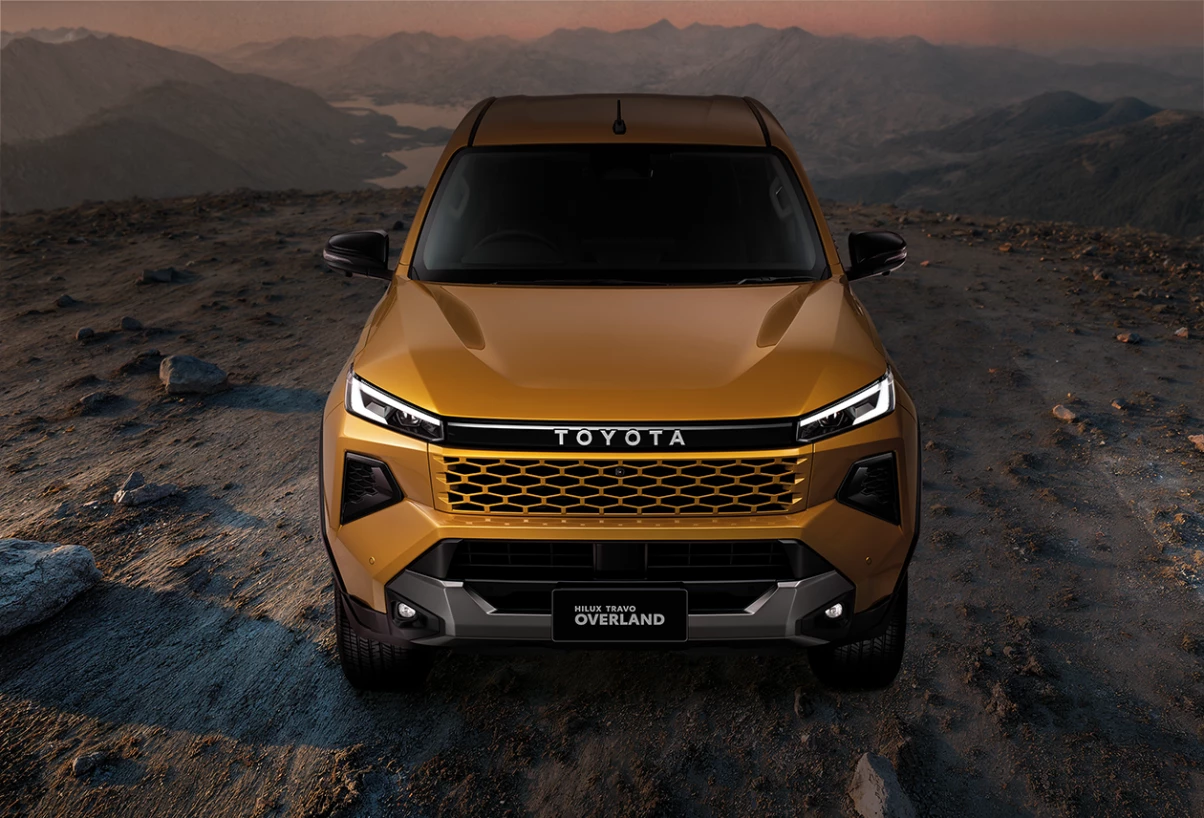
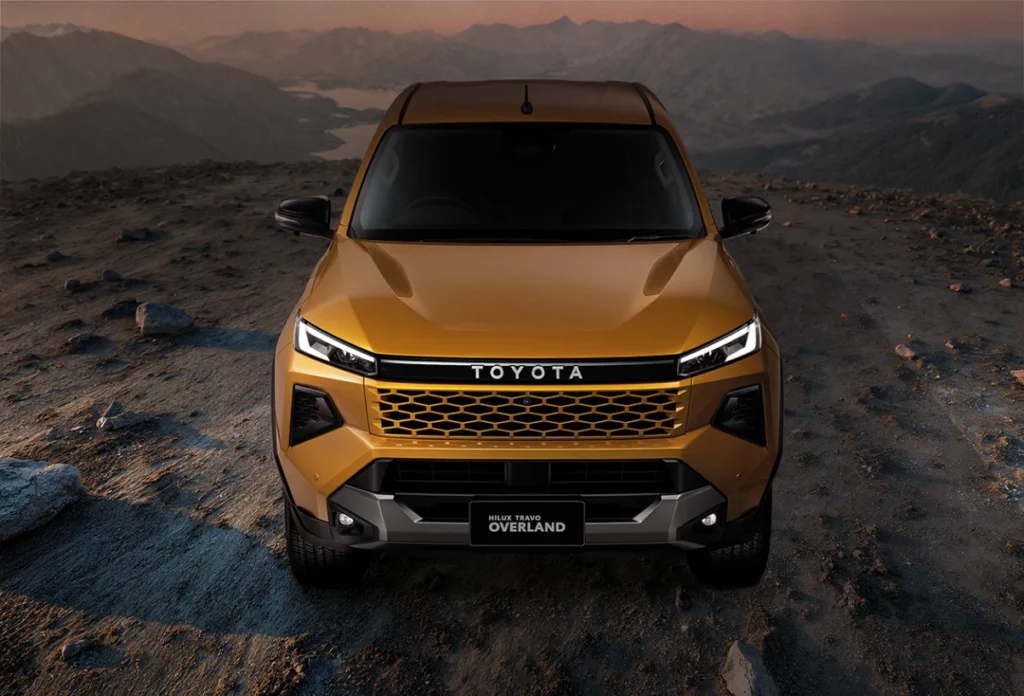
The “Range Trap”: Why chasing 600km might be ruining your business.
The global EV market is currently obsessed with a “numbers game.” Everyone is fixated on how many miles a Tesla can travel or whether a Chinese electric pickup can cross a continent on a single charge. But professionals who use pickups as real-world tools know a harsh truth: The higher the range, the heavier the truck, the slower the performance, and ultimately, the shorter the lifespan.
Toyota has made a bold, almost arrogant move with the 9th generation Hilux electric model, the ‘Travo-e’. It features a range of just 315km (NEDC). In real-world driving (WLTP), you’re looking at around 240–260km. While competitors scream about 400km or 500km, why did Toyota stick with such a “modest” number? The answer lies in a chilling piece of business logic that prioritizes profitability and reliability over vanity metrics.
1. The Physics of Profit: Why a 59.2kWh Battery is the “Sweet Spot”
The Hilux Travo-e is equipped with a 59.2kWh Lithium-ion battery pack. Compared to the 100kWh monsters found in modern electric SUVs, this seems tiny. However, this is exactly where the ‘Revenue Gap’ is created.
1. The Weight Paradox: Bigger batteries make trucks incredibly heavy. In the pickup world, weight equals a loss in Payload. By minimizing battery weight, the Travo-e maintains a 715kg payload capacity and a 2,000kg towing capacity. It remains a “real truck,” unlike competitors that are too heavy to carry anything but their own batteries.
2. The Economy of Charging: Time is money. Charging a massive 100kWh battery takes forever. The Travo-e’s efficient 59.2kWh pack can hit 80% in just 30 minutes using 125kW–150kW fast charging. For a business, a truck that spends less time at the plug is a truck that earns more on the road.
2. ‘Diamond Guard’: Trading Range for Indestructibility
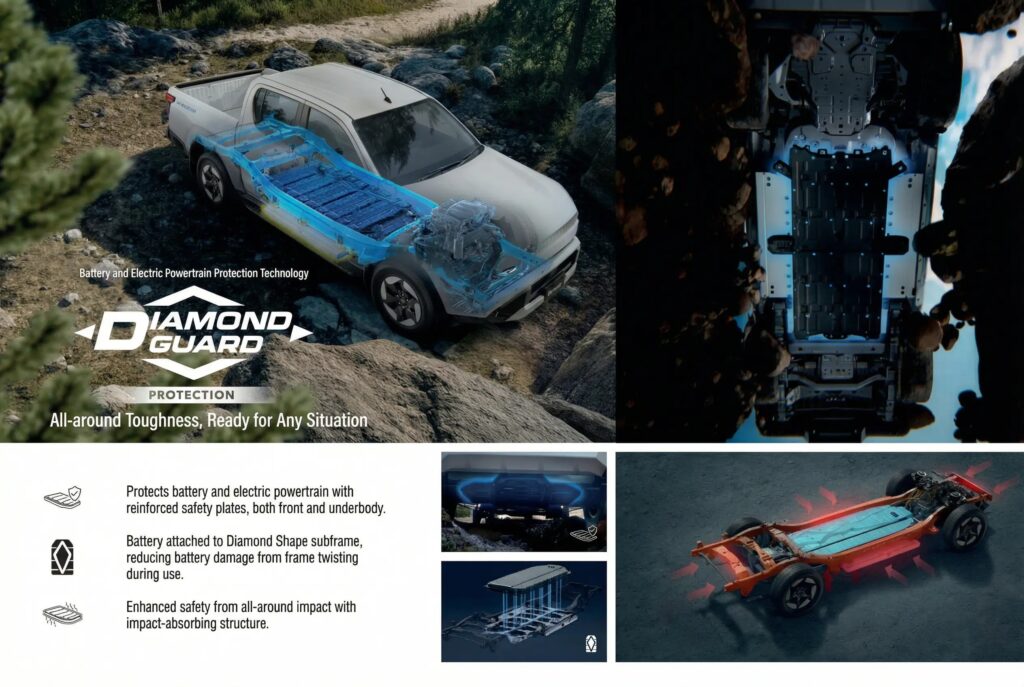
Instead of stuffing cells into every available inch to increase range, Toyota utilized that space to build a ‘Fortress of Steel.’ This is the Diamond Guard technology.
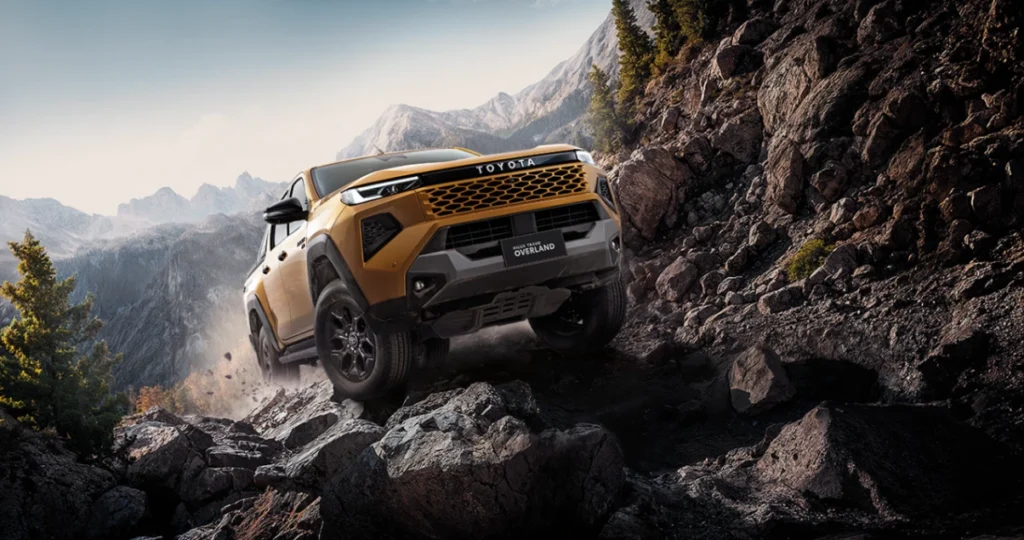
The biggest fear for an electric pickup owner is damaging the battery on rough terrain or having the battery pack crack due to frame twisting during off-roading. Toyota solved this by embedding the battery pack deep inside the TNGA-F platform’s frame rails. This structure physically shields the battery from external impacts and torsional stress. Toyota chose “The battery will never fail” over “The battery will go 50 miles further.”
3. ‘Dynamic Cloud’: Reforming the Pickup Ride Quality
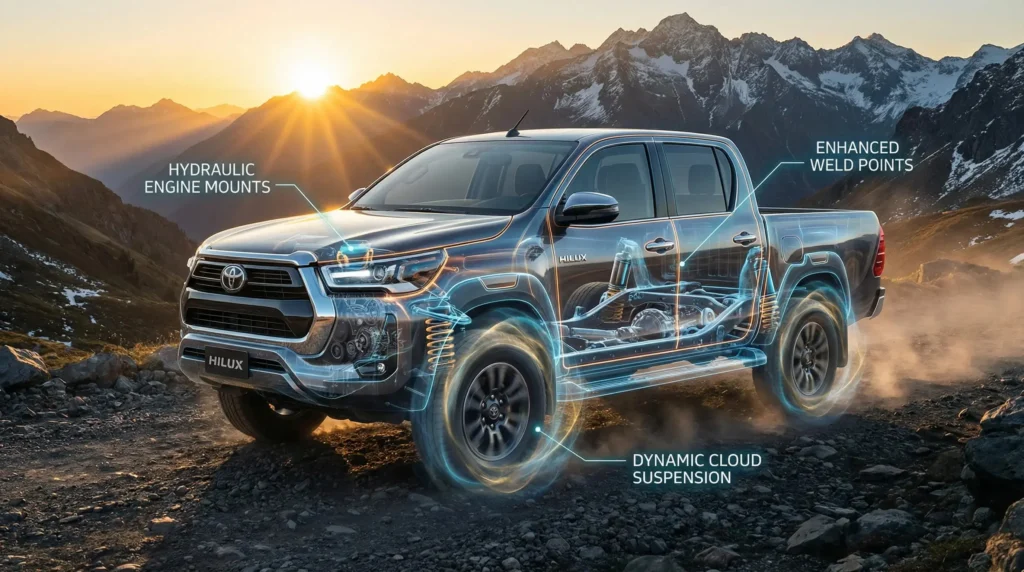
For decades, Hilux owners complained about the “bouncy” unladen ride quality. Toyota used the Travo-e as an opportunity to fix this once and for all.
1. De-Dion Rear Axle: Specifically designed for the EV model, the De-Dion rear axle combined with multi-leaf springs manages the heavy rear motor weight while filtering road shocks like a luxury sedan.
2. Low Center of Gravity: By placing the battery low within the frame, the Travo-e gains a level of high-speed stability that traditional pickups can only dream of.
The Dynamic Cloud system protects your spine and maximizes work efficiency. No more excuses that “trucks are uncomfortable.”
4. Real-World Gains: Why Mines and Farms are Waiting for the Hilux
The target audience for this vehicle is clear: ‘Back-to-Base’ operations. Whether it’s a mining site or a massive plantation, daily travel rarely exceeds 200km. There is absolutely no reason to haul a heavy, expensive 600km battery for these tasks.
In fact, the shorter range means the vehicle price is lower, durability is higher, and the resale value—being a Toyota—will remain at the top of the charts. Ten years from now, which will be worth more: a Chinese EV with a degraded battery or a Hilux that is still “Unbreakable”?
Conclusion: Only those who ignore the “Numbers Game” will win.
While brands like the KGM Musso EV tempt you with 400km+ ranges, ask yourself this: What happens when the battery gets hit by a rock in the middle of nowhere? Or when efficiency drops by 40% in -20°C temperatures?
The Toyota Hilux Travo-e is an ultra-efficient tool that “discarded the unnecessary and kept only what is non-negotiable: Reliability.” The 315km range is not a weakness; it is Toyota’s most arrogant and confident message to the pickup market.
“When others chase numbers, you should choose value. The winner of the 2026 market has already been decided.”
❓ FAQ Frequently Asked Questions
Q1. Why is the range of the Hilux Travo-e limited to 315km? A1. Toyota prioritized weight efficiency and payload capacity over excessive battery size. By using a 59.2kWh pack, the Travo-e maintains a 715kg payload, making it a more practical tool for business and off-road use than heavy, long-range competitors.
Q2. What is the benefit of the ‘Diamond Guard’ system? A2. It is a specialized subframe structure that physically shields the battery and electric powertrain from impact and frame twisting. This ensures the vehicle remains ‘unbreakable’ even in extreme off-road conditions where standard EV battery packs might fail.
Q3. Does the electric version offer the same comfort as the diesel model? A3. Actually, it’s better. The Dynamic Cloud system, combined with the De-Dion rear axle specifically designed for the BEV, provides a sedan-like ride quality that eliminates the typical bounciness of traditional pickups.
External Links
Toyota’s official model announcement confirms the Hilux is moving into a 9th-generation lineup that includes a first BEV variant in Europe, with positioning focused on durability and real-world utility in the pickup segment: Toyota Europe Newsroom – All-new Hilux (includes BEV).
Toyota’s global newsroom also lists the BEV’s 59.2 kWh lithium-ion battery and a 300 km+ target range (market-specific testing standards may vary), giving you an official reference for the “small battery by design” premise: Toyota Global Newsroom – New Hilux (BEV details).
For a simple regulatory overview of WLTP and Real Driving Emissions (RDE) in the EU context, this official summary works well as a credibility anchor: EUR-Lex – WLTP and RDE summary.
Your “-20°C range hit” warning is easy to substantiate with AAA’s controlled testing, which found winter HVAC use can cause a major range drop at low temperatures: AAA Newsroom – Cold weather reduces EV range.
For an industry-level quote supporting the “big batteries are getting too heavy” narrative, Reuters has a clean, widely-cited line on why automakers are pushing to cut battery weight dramatically: Reuters – Automakers must halve EV battery weight (Stellantis CEO).
Internal links
If you’re weighing “bigger battery” hype against long-term ownership risk, the numbers behind maintenance and parts pricing matter most in EV repair cost analysis.
If your plan relies on frequent fast charging to compensate for shorter range, you should factor in the durability tradeoffs explained in EV fast charging and battery life risk.
If you want a direct benchmark against the 400km-class narrative in the Korean pickup market, the spec-side context is laid out in Kia Tasman vs KGM O100 Musso EV technical comparison.
🌐 Auto Lab Editorial Signature
✍️ Editor’s Note Produced & Analyzed by: Auto Lab Strategic Analysis Team
Data Sources: Official global manufacturer press releases and public certification data from the Ministry of Environment (ME) and the Ministry of Land, Infrastructure and Transport (MOLIT).
Auto Lab goes beyond simple news reporting to analyze the truth hidden within the data. We hope this content serves as a valuable roadmap for your smart and rational automotive lifestyle.